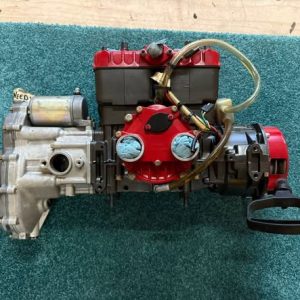
The Rotax 582 “Blue Head” RAVE Engine – Built by Rotax Rick may support an ultralight restoration, experimental-aircraft project, gyrocopter application, powered-parachute build, or replacement-engine requirement.
A Rotax 582 Blue Head may also be marketed as a Rotax 582 Blue Head RAVE Engine or Rotax 582 Aircraft Engine when its cylinder-head design, power-valve system, accessories, and build history are verified.
Whether described as a Rotax 582 Two-Stroke Engine, Rotax 582 Ultralight Engine, Rotax 582 Aviation Engine, or Rotax 582 65HP Engine, professional inspection should precede installation.
Accurate descriptions help customers compare engine condition, accessories, installation needs, maintenance records, and commercial value.
An Experimental Aircraft Engine, Ultralight Aircraft Engine, Rotax Aviation Engine, and Light Sport Aircraft Engine can support diverse recreational and sport-aviation projects when the exact application is verified.
Understanding the Rotax 582 Blue Head
The seller should provide detailed photographs of the engine from every side, including the data plate, heads, cylinders, carburetors, gearbox, ignition, exhaust ports, and accessories.
Strong traceability improves the commercial value of the Rotax 582 Blue Head RAVE Engine.
Confirming Rotax Rick Build Records
Clear builder documentation strengthens the engine listing and supports future maintenance planning.
Any remaining break-in requirements, operating limitations, fuel recommendations, or follow-up inspections should be disclosed.
Evaluating RAVE Engine Condition
Carbon deposits, sticking components, damaged diaphragms, incorrect assembly, or worn parts can affect system operation.
RAVE components should move as intended and remain free from severe contamination, damage, leakage, or unauthorized modification.
Two-Stroke Aircraft Engine Operation
Its dependable operation depends on correct fuel, lubrication, carburetion, ignition, cooling, exhaust, loading, and maintenance.
An unknown or improperly configured lubrication system can create serious internal wear or engine damage.
Liquid-Cooled Blue Head Design
The blue-head configuration is associated with a liquid-cooled cylinder-head system designed to manage engine temperatures through a complete cooling circuit.
Preventive cooling maintenance protects the Liquid-Cooled Aircraft Engine from avoidable thermal stress.
Evaluating Internal Engine Components
Both cylinders should be evaluated because uneven compression, mixture, cooling, ignition, or wear can affect the complete engine.
Professional internal evaluation supports the long-term value of the Two-Cylinder Aircraft Engine.
Carburetor Synchronization and Mixture
Incorrect synchronization can contribute to uneven operation, vibration, poor response, or cylinder-to-cylinder differences.
The engine should not be run under load until the complete fuel system has been evaluated.
Dual Ignition and Electrical Components
Ignition modules, coils, leads, spark-plug caps, plugs, grounds, switches, and connectors should be identified and inspected individually.
Ignition checks should be completed through controlled procedures appropriate to the engine and aircraft installation.
Selecting a Compatible Propeller System
The exact gearbox model, ratio, serial information, service history, and included components should be confirmed before purchase.
Professional matching protects the Rotax 582 Aircraft Engine and connected propeller system.
Maintaining Exhaust Connections and Supports
The buyer should confirm whether the engine package includes the complete exhaust system.
Exhaust parts should remain clear of fuel lines, coolant hoses, wiring, controls, and heat-sensitive components.
Using the Rotax 582 in Light Aircraft
The Rotax 582 is frequently considered where compact dimensions and useful power are important to the aircraft design.
System-level planning protects the value of the Lightweight Aircraft Engine installation.
Matching the Rotax to the Airframe
Aircraft-specific evaluation supports responsible Ultralight Aircraft Engine selection.
Professional planning supports a more dependable experimental-aircraft project.
Understanding Installation Responsibilities
Accurate product descriptions help prevent unsupported regulatory or compatibility claims.
Operating limitations should reflect the actual aircraft and engine combination.
Engine Hours, Build Time, and Service History
A low-hour statement should be supported by logs, invoices, tachometer records, builder documents, or other credible evidence.
Maintenance records should include inspections, carburetor work, ignition service, cooling-system maintenance, gearbox service, hose replacement, seal work, and Lightweight Aircraft Engine any engine-removal events.
Evaluating a Built Aircraft Engine
Engine runs should be completed using suitable mounting, cooling, fuel, exhaust, propeller-safety, and monitoring procedures.
Test results should document temperatures, engine speed, ignition checks, coolant behavior, fuel leaks, exhaust condition, and any abnormal indications when appropriate.
Evaluating Cylinders and Seals
Comprehensive mechanical evaluation supports informed purchasing.
Any abnormal resistance, noise, corrosion, play, or contamination should be investigated.
Aircraft Engine Buying Guide
A pre-purchase review should confirm the exact model, serial number, RAVE configuration, builder documentation, engine hours, gearbox, carburetors, ignition, cooling components, exhaust, run-test results, and included accessories.
- Determine whether the radiator, exhaust, carburetors, air filters, starter, gearbox, ignition modules, mounts, instruments, manuals, and build records are included.
- Confirm whether the engine has been broken in, operated in flight, stored after assembly, removed after a fault, or sold as an unflown project engine.
- Inspect and photograph the engine immediately after delivery before rotating, testing, disassembling, repairing, mounting, or connecting fuel and electrical systems.
Protecting an Aircraft Engine in Transit
The engine should be secured to a suitable shipping base or crate that supports its weight without loading delicate carburetors, fittings, wiring, cooling connections, or exhaust components.
During storage, the engine should remain dry, clean, supported, preserved, and protected from moisture, dust, insects, corrosion, chemicals, and uncontrolled handling.
Integrating Fuel, Cooling, and Electrical Systems
The engine mount, attachment hardware, vibration isolators, alignment, clearances, weight, and center of gravity should be evaluated before final installation.
Complete installation planning supports dependable Rotax 582 Ultralight Engine operation.
After installation, technicians should verify fastener security, engine alignment, propeller tracking, gearbox condition, fuel flow, carburetor synchronization, ignition operation, coolant circulation, instrument accuracy, and absence of leakage.
Routine Rotax 582 Inspection
Repeated adjustment should not replace diagnosis of an underlying engine or installation problem.
Operating data such as temperatures, engine speed, fuel consumption, plug condition, and ignition-check behavior can help identify developing concerns.
Commercial Value of the Rotax 582 RAVE Engine
Clean appearance and fresh paint may improve presentation but do not replace mechanical inspection.
Total project cost may include the engine, gearbox, propeller, radiator, exhaust, carburetors, filters, mounts, controls, instruments, fuel system, wiring, installation labor, testing, shipping, and documentation.
Buying a Specialist-Built RAVE Engine
The Rotax 582 “Blue Head” RAVE Engine – Built by Rotax Rick can provide valuable replacement, restoration, experimental-aircraft, ultralight, or spare-engine potential when its identity, build scope, condition, and compatibility are verified.
The strongest purchasing decision begins with confirming the exact engine model, serial number, RAVE configuration, builder documentation, internal parts, crankshaft history, operating hours, gearbox ratio, carburetors, ignition, cooling system, exhaust, test results, and included accessories.
Whether the requirement is a Rotax 582 Blue Head, Rotax 582 Blue Head RAVE Engine, Rotax 582 Aircraft Engine, or Rotax 582 Two-Stroke Engine, exact configuration should guide the purchase.
With responsible purchasing, careful fuel and oil management, effective cooling, synchronized carburetors, and preventive inspection, the engine can remain a valuable light-aircraft asset.